Learning
Literacy
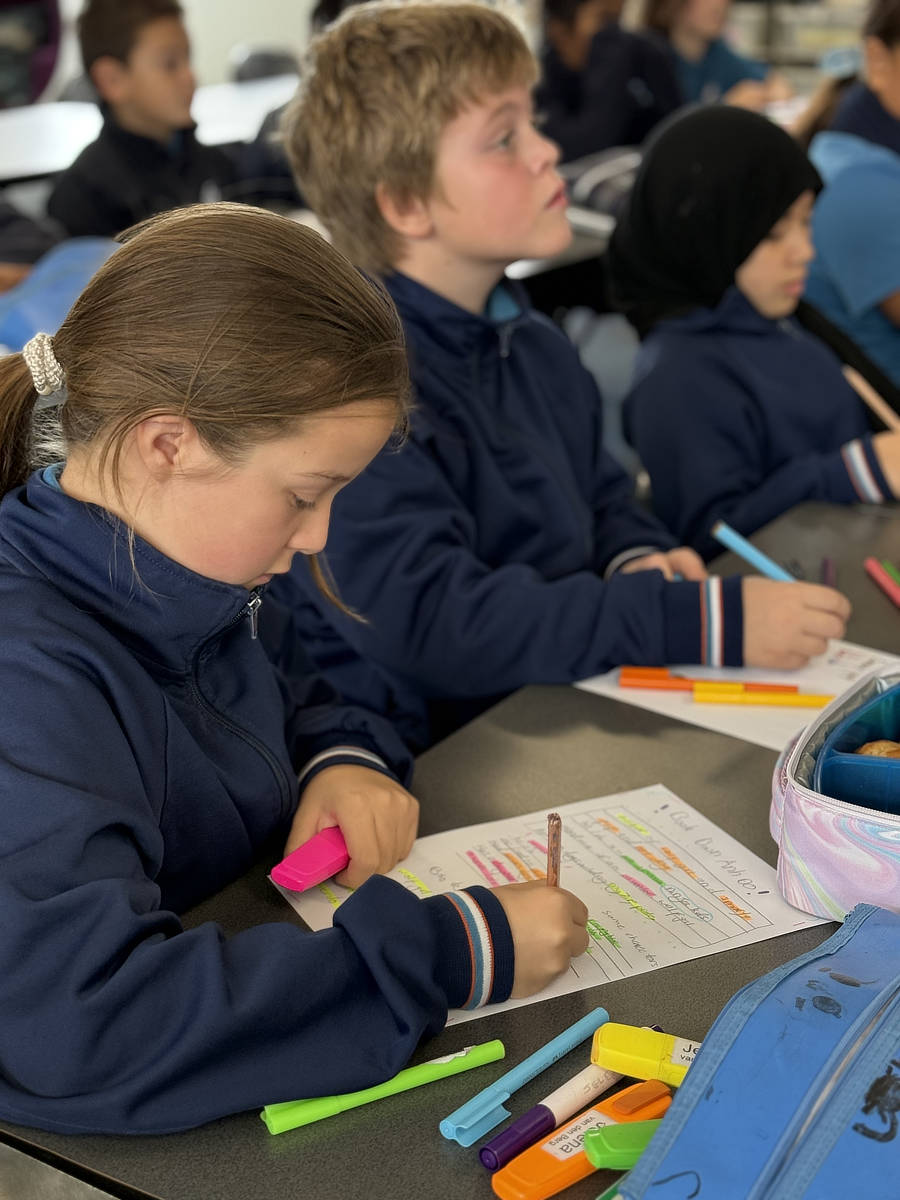
Cranbourne East Primary School dedicates two hours each day to a literacy block designed to improve students’ literacy development. Students are taught using a structured literacy approach that aligns with the Science of Reading, ensuring systematic and explicit instruction in all areas of English. This method supports the development of essential literacy skills through an intentional focus on phonemic awareness, phonics, fluency, vocabulary, and comprehension.
At our school, the reading and writing program from Foundation to Year 6 is built around a strong focus on developing skilled, confident readers. Students in Foundation to Year 2 are taught through a Systematic Synthetic Phonics approach. This evidence-based method explicitly teaches the relationship between sounds (phonemes) and letters (graphemes), enabling students to decode and encode words effectively.
Each lesson begins with a daily review or activation of prior knowledge to reinforce key skills and concepts, helping students make strong connections in their learning. They then engage in rich text studies and learn to discuss and write about characters, settings, events, and messages. These texts help build vocabulary, deepen understanding of texts, and support the development of both comprehension and writing skills. This approach provides meaningful contexts for students to apply their growing knowledge and literacy strategies.
Our literacy lessons are highly engaging and well-structured, offering students frequent opportunities to practise, consolidate, and showcase their learning in ways that foster confidence, enjoyment, and success in reading and writing.
Numeracy
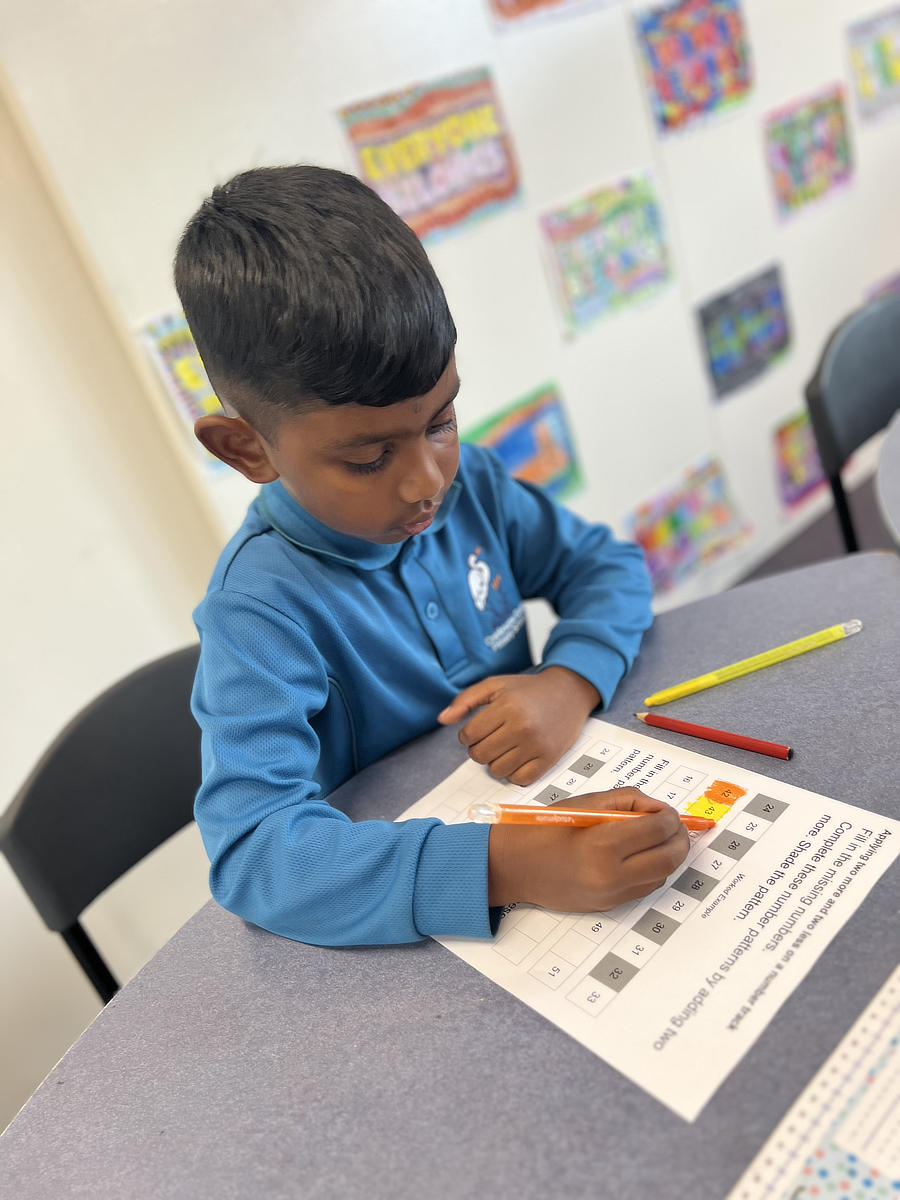
Mathematics refers to the learning and understanding of mathematical concepts and processes. Numeracy, on the other hand, is the ability to apply mathematical thinking, knowledge, and reasoning in a variety of real-life contexts. It involves using these skills to solve problems, make informed decisions, and clearly explain solutions.
At Cranbourne East Primary School, we strive to deliver a Numeracy program that is engaging, purposeful, and connected to everyday life. Our program is aligned with the Victorian Curriculum 2.0 for Mathematics, which is organised into six strands: Number, Algebra, Measurement, Space, Statistics, and Probability—with Probability introduced from Year 3 onwards.
We embed the Four Proficiencies—understanding, fluency, problem solving, and reasoning—into all areas of mathematics teaching and learning. This ensures students are not only able to perform mathematical procedures but also develop a deep understanding of concepts, apply their knowledge to solve problems, and communicate their thinking confidently and clearly.
Students at Cranbourne East Primary School participate in five hours of Mathematics instruction each week. Lessons begin with clearly communicated learning intentions and success criteria, helping students understand what they are working towards and why. Mathematics skills are primarily developed through explicit teaching, supported by opportunities for student-led exploration, with an emphasis on building problem-solving capabilities.
Through a range of hands-on activities and open-ended tasks, students practise and apply their mathematical learning in meaningful, real-world contexts. Our teaching practices are guided by the OCHRE and ARC framework, supporting structured and consistent lesson design that promotes effective instruction and high levels of student engagement.
Throughout each lesson, teachers check for understanding, use retrieval and spaced practice, and connect new learning to prior knowledge. These strategies help monitor student progress and support the development of deep, long-term mathematical understanding.
Learning Support
Learning Support Overview
At Cranbourne East Primary School, we are committed to meeting every student’s learning needs by targeting instruction at their individual point of readiness. Classroom programs are differentiated to ensure that all students are appropriately supported and challenged. In addition to this, we offer targeted support through our Intervention Programs for selected students requiring extra assistance in Literacy and Mathematics, as well as Enrichment Programs for students demonstrating advanced abilities, particularly in Mathematics.
Intervention Programs at Cranbourne East Primary School
Our Intervention Programs provide intensive support for students needing additional help in key learning areas. Selected students participate in small group sessions several times a week in our dedicated Tutoring Studio, led by trained educators. These sessions are designed to build confidence and promote measurable growth in targeted skills. Each student in the program has an Individual Learning Plan, and their progress is closely monitored. Teachers and families are regularly updated to ensure a collaborative approach to learning.
Literacy Intervention
For literacy intervention we implement the MiniLit (Years 1-2) and MacqLit (Years 4-6) programs. These programs represent the latest scientific research and evidence base on effective reading instruction and intervention. They comprise small group sessions, which run for approximately 45 minutes, with a focus on targeted, explicit instruction in phonemic awareness, systematic synthetic phonics for reading and spelling, letter formation and connected text reading. These sessions complement the classroom literacy program, providing targeted and explicit teaching to boost foundational reading skills.
Numeracy Intervention
Numeracy support at Cranbourne East Primary School includes two key programs – Bond Blocks and GRIN. Together, these programs form a comprehensive numeracy support framework that builds confidence, competence, and a deeper understanding of mathematical concepts.
Bond Blocks
This evidence-based, differentiated program targets the development of fundamental maths skills. Students work in small groups during several 40-minute sessions each week, focusing on:
- Number bond fluency
- Addition and subtraction to 20 and beyond
- Conceptual understanding of addition and subtraction
- Efficient strategies for calculation
- Place value and number sense
- Mathematical problem-solving skills
GRIN – Getting Ready In Numeracy
GRIN sessions are brief, 15–20-minute tutorials held before the regular maths lesson. Delivered by trained tutors, these sessions aim to:
- Prepare students for their upcoming classroom lesson
- Introduce and familiarise students with key vocabulary and concepts
- Model strategies and concepts they will encounter during the main lesson
Student Enrichment Programs
Enrichment support is given to students in Mathematics by our designated Maths Enrichment Leader. Students in Years 4, 5, and 6 who are achieving well above the standard in Mathematics domains are placed onto the school Maths Enrichment Program. Our Enrichment Leader supports the extension and development of students’ mathematical knowledge based on individual needs, with a focus on deepening their Understanding, Fluency, Problem-Solving, and Reasoning skills. Cranbourne East Primary School participates in Victorian High Ability Program delivered by Virtual School Victoria. The program focuses on developing Mathematical and English abilities for selected students. Students are selected to participate through a centrally managed process based on student academic performance in NAPLAN and teacher judgement (progression points). Our designated Enrichment Leader oversees the program supporting and guiding students as they participate in lessons. Student participation is online with other students from various schools across the state.
Specialist programs
Blank for CSS - Don't delete
Health & Physical Education
At Cranbourne East Primary School, our Physical Education Program is designed to equip students with the knowledge, skills, and confidence needed for active and healthy living.
We are committed to providing every student with a weekly 60-minute session led by our dedicated Physical Education team. Our facilities include two basketball courts, a full-sized oval, a synthetic turfed area called the agora, and a spacious indoor gymnasium. Our program is supported with colourful equipment that enhances learning across all areas of the Health and Physical Education curriculum.
Our curriculum aligns directly with the Victorian Curriculum. In Foundation to Year 2, students focus on developing Fundamental Movement Skills through engaging games and rotations. This fosters movement confidence in a supportive and enjoyable environment.
From Year 3 to Year 6, students continue to refine their Fundamental Movement Skills through modified games and activities. They gain confidence in applying these skills in sport-specific settings using a Game Sense approach. Additionally, they explore the key elements of leading a healthy and active lifestyle.
Whole school activities:
Swimming
At CEPS, we prioritize water safety for all students. We provide opportunities for every student to learn swimming and essential water safety skills.
Camps
Year 4
In 2024, our Year 4 students will experience an exciting and engaging camping trip to CYC The Island in Cowes, Phillip Island. The students build independence, confidence, and friendships while enjoying activities like ziplining and low ropes courses.
Year 6
At Woorabinda Camp, students explore diverse landscapes and participate in environmental studies, team building, and adventurous challenges. Students will explore sustainability, engage in exciting activities, and develop leadership skills.
Cross country
Led by our PE Team, all students participate in a fun run. Top performers represent the school at the District Cross Country event.
Athletics
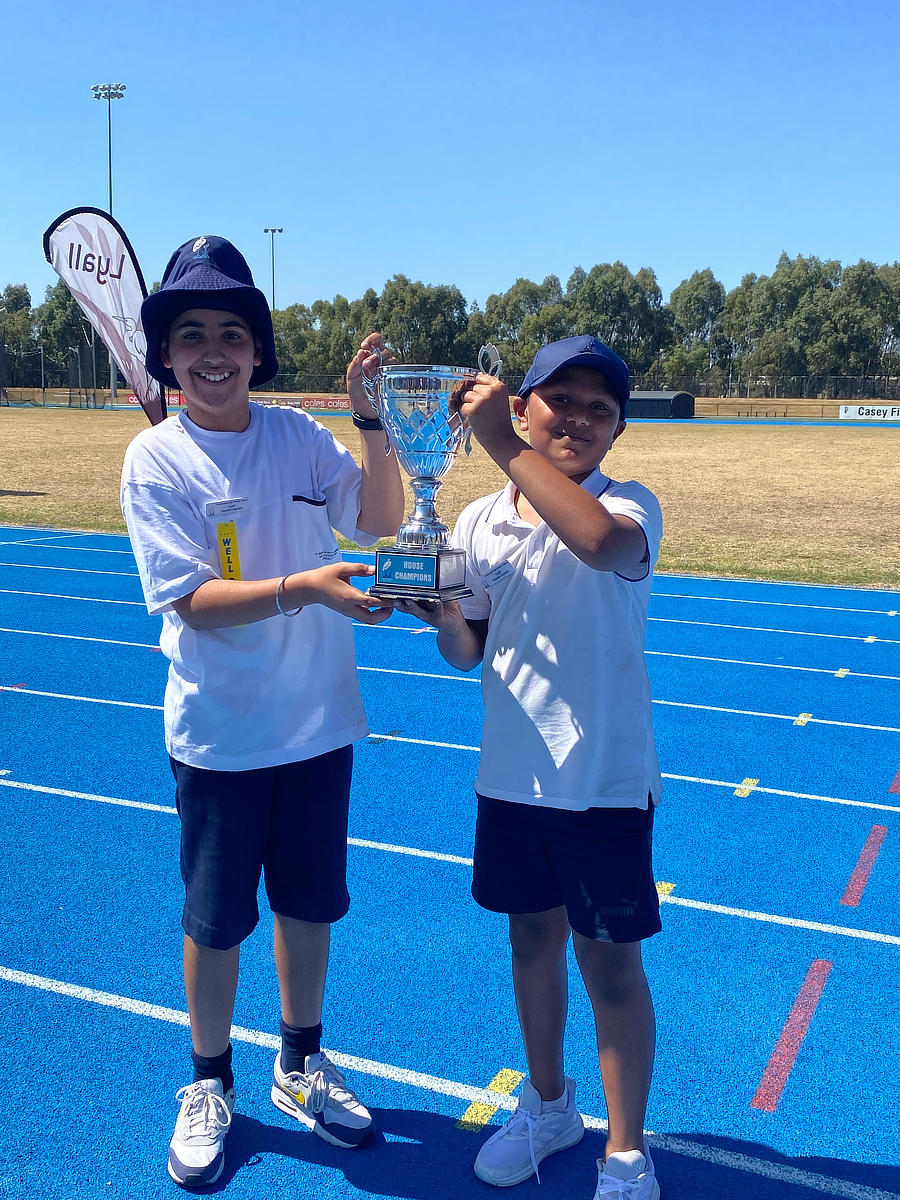
Students from Year 3 to Year 6 compete in track and field events at the Casey Fields Athletics Track, enhancing physical fitness and skills.
Year 6 Lightning Premiership
Students compete in various team sports against other schools, showcasing their skills and teamwork.
Lunchtime Activities
Teacher lead activities during recess and lunch to promote physical activity, focus, and social skills.
Hoop time
Students eagerly anticipate the Hoop Time basketball tournament, where they compete and support each other, demonstrating teamwork and sportsmanship.
Performing Arts
The Performing Arts program at Cranbourne East Primary School encourages all children to express their ideas and feelings through Music, Dance and Drama. Every student is given the opportunity to sing, dance, and act out drama skits while also using a variety of musical instruments. Students are given the opportunity to work on their own performances while also participating in group activities.
The students in Foundation to Year 2 learn the basics of beat, pitch, rhythm and movement through voice and instrumental playing. This is done with tuned and untuned percussion.
As the students progress into Year 3 and Year 4 they put these skills into a number of musical activities whether it be singing, instrumental or movement.
In Year 5 and Year 6 the students are required to expand and improvise on the fundamentals of music such as making up movement patterns for dances, acting out TV commercials and playing complex rhythms while also learning about the theory of music.
The children have numerous opportunities to showcase their talents and achievements through online assemblies and performances in class.
The school has a Choir which performs at school events and for local organisations.
Digital Technologies & Cyber Safety
ll students have access to a very well-resourced Digital Technology lab. Our vibrant lab is filled with modern equipment that ensures our students are not limited when it comes to creativity, innovation and collaboration. The
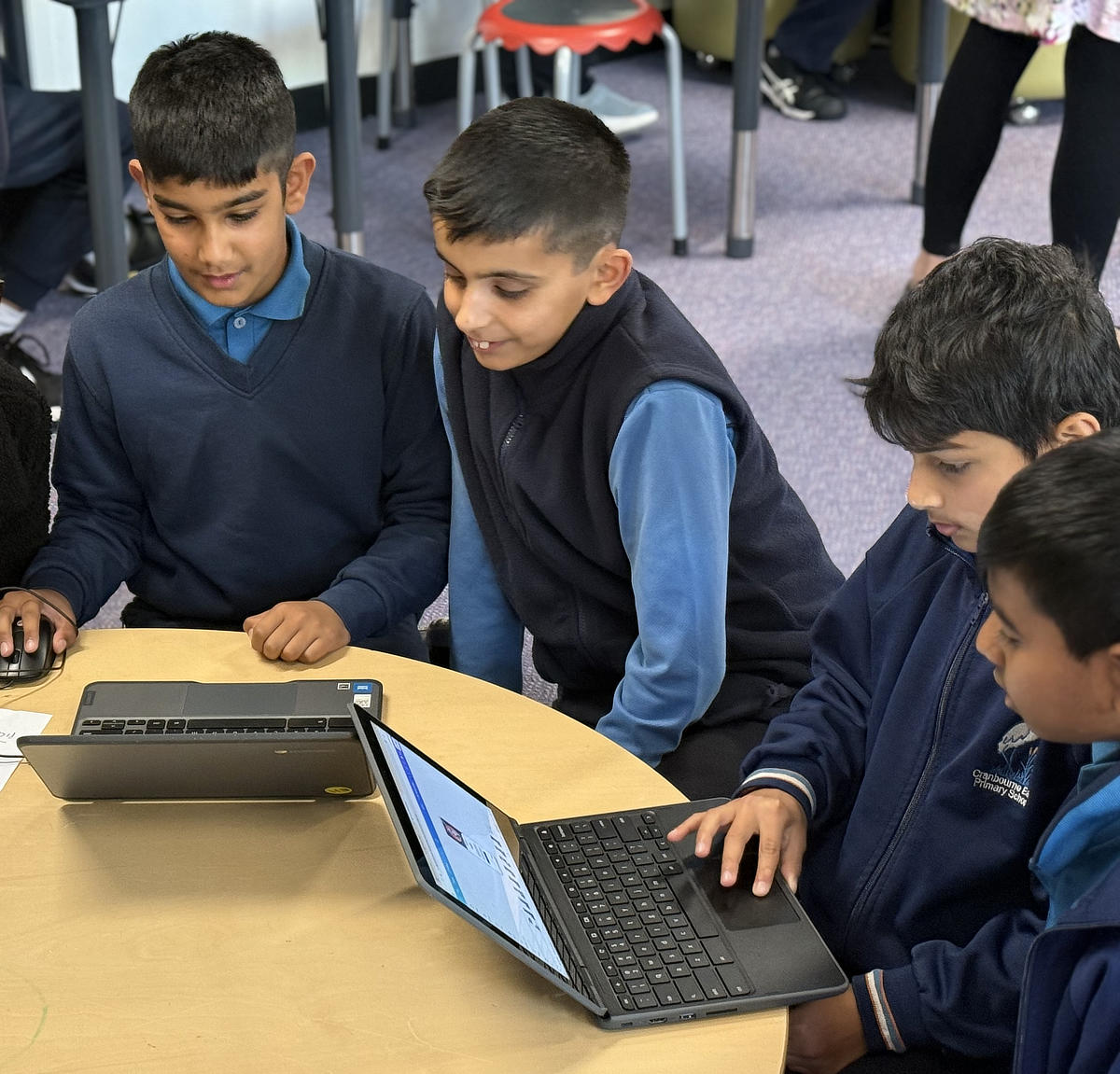
DigTech Lab resources include devices such as Chromebooks, IPad’s, Micro:bits and Makey Makeys. Students are provided with ongoing opportunities to become confident and creative when using these devices.
Students build and develop coding and robotics skills using our well-equipped Robotic class sets. These set include BeeBots, WeDo2.0, Probots, and Spero Bolt Robots. These hands-on coding and robotic lessons build foundational coding skills.
Students become proficient in a variety of programs including Google Apps for Education (GSuite), Lego Robotics, Code. Org and Scratch.
Visual Arts
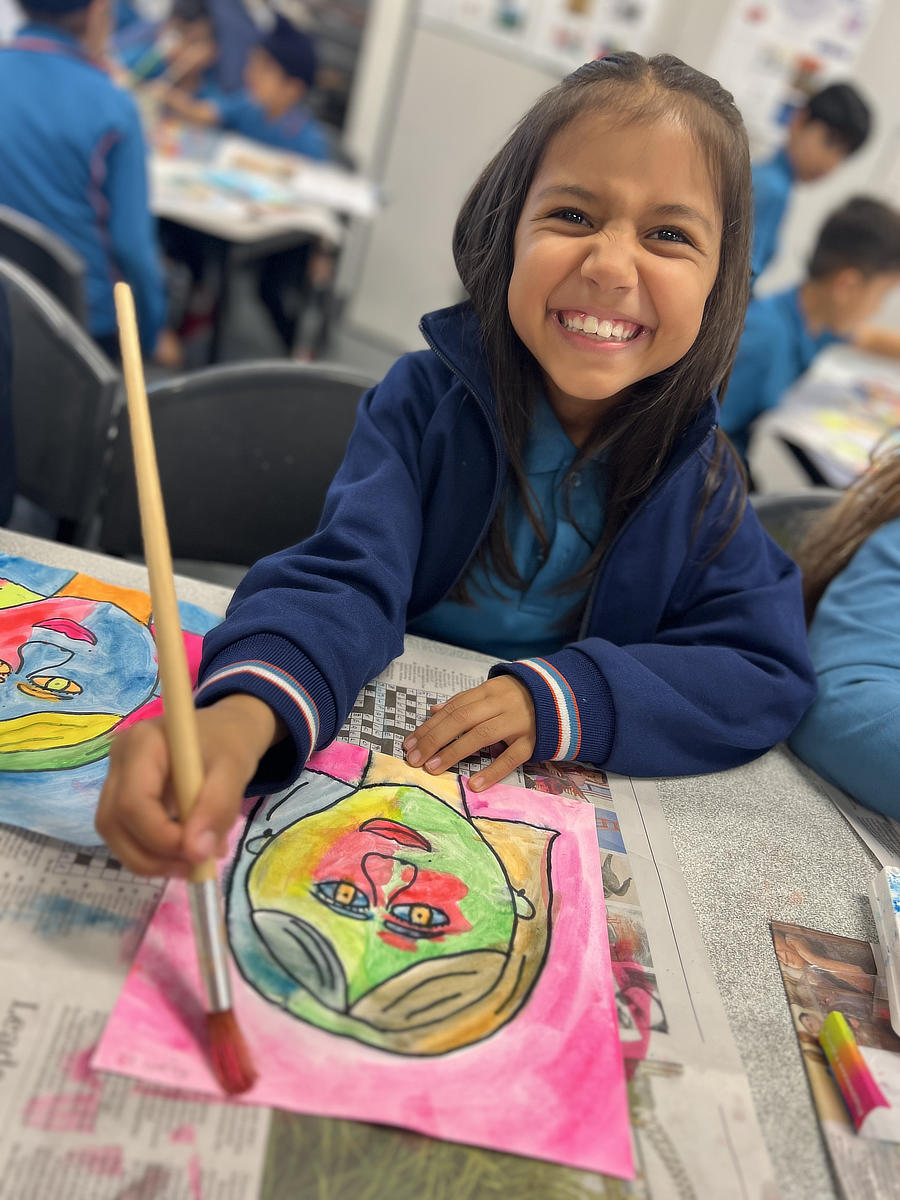
The Visual Art rooms at Cranbourne East Primary School are well equipped, exciting places of creativity and exploration where students are encouraged and challenged to achieve their artistic potential in an enjoyable, inspiring and supportive environment.
Students develop and refine their practical and fine motor skills as they experiment with materials, tools and techniques. Throughout their time at CEPS, students are given the opportunity to explore a wide variety of different art mediums such as drawing, painting, textiles, printmaking, collage, sculpture and modelling; encompassing all Elements of Art. Art classes are 60 minutes long and lessons are often inspired by other cultures (such as Indigenous Australian, Indian, Central and South American cultures) and famous artists (James Rizzi, Pablo Picasso and Claude Monet, for example). Students learn to respond to their own art work as well as the art work of others.
The artworks produced by our students are celebrated and displayed in the art rooms, around the school, in our school newsletter and on our weekly online assemblies. Children are given the opportunity to enter Art competitions and invited to attend recess art clubs.
Science
Children are natural scientists, born curious about the world around them. Science at Cranbourne East Primary School aims to develop and extend students innate interest in the biological, physical and technological world. We want to keep students engaged and excited about science! Classes blend enticing class demonstrations with small group activities to make complex scientific concepts accessible and facilitate genuine learning.
Learning science at school provides students with opportunities to ask questions, make predictions, solve problems and draw conclusions about the world around them, and beyond. Through fun hands-on activities, students develop an understanding of scientific processes and learn to think like scientists. They work on recognising patterns and ordering and organising phenomena to assist with understanding. By the end of primary school, we hope to have given students the skills to make informed decisions about local and global issues as well as participate in science related careers if they choose.
Students actively participate in all streams of scientific understanding including Earth and Space, Biological, Physical and Chemical Science in addition to a range of scientific skills that are relevant to many other areas of life. Some of these inquiry skills include planning and conducting, recording and processing, analysing and evaluating as well as communicating observations, ideas and findings.
Science, Technology, Engineering and Maths (STEM) is incorporated into each lesson. In collaborative small groups students often think about real world problems with real world constraints to come up with a range of solutions as a team. All lessons are underpinned by important sustainability and social responsibility ideas and practices.
So far this year we have erupted instant snow, made a colour-change bead keychain that detects UV light, launched popping test tubes underwater to create a tsunami, watched solar grasshoppers and spiders jump in the sun, created an indoor rainbow using a prism, modelled seismic earthquake waves with a slinky, and more. And there are lots, lots more to come!
“I have no special talent. I am only passionately curious.” Albert Einstein
STEM
Welcome to STEM at Cranbourne East Primary School!
At Cranbourne East Primary School, we’re excited to introduce our students to the world of STEM—Science, Technology, Engineering and Mathematics. STEM is all about exploring real-world problems, thinking creatively, and working together to design innovative solutions.
Through hands-on challenges and engaging projects, our students will become designers, creators, and problem-solvers. From building bridges and designing moving toys to experimenting with coding and developing sustainable solutions, our learners will use critical thinking and collaboration every step of the way.
STEM learning at CEPS encourages curiosity, builds confidence, and prepares students for the future—equipping them with the skills to thrive in a rapidly changing world. It’s not just about learning what to think, but how to think.
Get ready to imagine, explore, and invent—because STEM starts here!
Health
At Cranbourne East Primary School, the Health specialist program supports students to develop the knowledge, skills, and confidence to lead healthy, active, and connected lives. Through engaging and inclusive learning experiences, students build their understanding of physical, social, emotional and mental wellbeing while developing positive relationships and healthy habits that will support them throughout their lives.
All students explore topics through the ‘branches of health’- social, emotional, physical, and mental health, including understanding personal identity, respectful relationships, emotional regulation, personal safety, help-seeking strategies, nutrition, and the benefits of regular physical activity.
Specifically, in Foundation to Year 2, students learn about recognising and expressing emotions, building friendships, personal safety, and making healthy choices. They begin developing the skills to communicate effectively, cooperate with others and participate safely in physical activities.
As students’ progress through Years 3 and 4, they further develop their understanding of resilience, teamwork, inclusion, and respectful relationships. Students explore strategies to support their own wellbeing and the wellbeing of others while continuing to build movement skills and confidence in a range of activities.
In Years 5 and 6, students are encouraged to think critically about influences on health and wellbeing, develop leadership and decision-making skills, and strengthen their understanding of respectful relationships, online safety, diversity, and inclusion. They learn strategies to support positive mental health and are empowered to make informed choices that contribute to a healthy lifestyle. Understanding puberty through learning about anatomy is introduced in Year 5, and in Year 6 puberty and basic sexual health concepts are covered.
Through the Health program, students are encouraged to challenge themselves, work collaboratively and develop the skills needed to become resilient, respectful, and active members of their community.